
Best Trucks for Last-Mile Delivery: 5 Picks From ₹3.99L

The best trucks for last-mile delivery in India now start at about ₹3.99 lakh ex-showroom, and the gap between a three-wheeler and a proper four-wheel mini truck has rarely been smaller. With festive-season parcel volumes peaking in October 2026, fleet owners and first-time operators are signing delivery contracts and need a vehicle that earns from week one. The right pick comes down to parcel weight, daily running and whether your hub has CNG stations or EV chargers nearby.
What Makes the Best Trucks for Last-Mile Delivery in India
Parcel work is about payload and cost per kilometre, not top speed. Most e-commerce cartons are bulky but light, so a 750 kg payload covers the majority of apparel, FMCG and electronics runs, while appliance and grocery hubs need 900 to 1,000 kg. Look at the gross vehicle weight (GVW), the cargo deck length and the turning circle, because your driver will spend eight to ten hours a day in Delhi, Mumbai or Bengaluru traffic. Running cost decides the real margin: with diesel at about ₹95 a litre and petrol near ₹103, a 2,600 km month, roughly 100 km a day over 26 working days, adds up faster than most new operators expect.
The Five Picks Worth Your Money
Tata Ace Pro: The Cheapest Way In
The Tata Ace Pro is the lowest-priced four-wheel cargo vehicle in this list, with the petrol version at about ₹3.99 lakh. Its 694 cc engine makes around 30 bhp and 55 Nm, and all variants are rated for a 750 kg payload. The Bi-Fuel version, which runs on petrol and CNG, is the one most delivery fleets will want, since CNG costs far less per kilometre than petrol in cities with dense station networks. In stop-start traffic, a real-world 14 kmpl on petrol is a fair expectation, which means roughly 186 litres or ₹19,000 of fuel over a 2,600 km month. The Ace Pro EV, at about ₹6.50 lakh, has a certified range of 155 km from a 14.4 kWh battery, enough for hub-to-doorstep loops of 80 to 100 km a day.
Maruti Suzuki Super Carry: The Closest Rival
The Maruti Suzuki Super Carry is the Ace Pro’s most direct rival, with ex-showroom prices running from roughly ₹5 lakh to ₹6 lakh depending on the petrol or CNG variant and body type. Payload is in the 700 to 750 kg band depending on variant, so it matches the Ace Pro on parcel work rather than beating it. Where Maruti scores is its service network, which reaches deep into tier-2 and tier-3 towns and cuts downtime when the truck is your only earner. The trade-off is price: it costs more than the Ace Pro’s entry variant for a similar payload class.
Mahindra Jeeto: The Fuel-Sipper
The Mahindra Jeeto runs a compact diesel or CNG engine and is priced from about ₹4.7 lakh to ₹5.65 lakh, with a payload that depends on variant and sits between 600 and 815 kg. Its claimed diesel mileage of up to 34 kmpl is the best in this group, though a loaded Jeeto in city traffic will realistically deliver well below that figure. The small footprint helps in narrow lanes and gated societies, where a longer truck simply cannot turn. Pick it when your loads stay light and your routes are short.
Tata Ace Gold Diesel and Intra V10: When Loads Get Heavy
Once parcels give way to appliance cartons and packaged groceries, payload becomes the deciding number. The Tata Ace Gold Diesel is rated for about 900 kg and is priced at roughly ₹6 lakh, with real-world mileage likely in the 17 to 19 kmpl range against a claimed 22 kmpl. At 18 kmpl and ₹95 a litre, a 2,600 km month costs about ₹13,700 in diesel, which is nearly ₹5,400 less than the Ace Pro on petrol. The Tata Intra V10 steps up to a 1,000 kg payload on a 2,120 kg GVW, priced from ₹6.75 lakh to ₹7.51 lakh, and its longer wheelbase suits highway runs between a warehouse and a district hub. Drivio’s earlier Tata Ace EV vs Ace Gold Diesel comparison walks through how the diesel stacks up against electric on monthly earnings.
On-Road Price and EMI Reality
Ex-showroom is only the starting figure. In Delhi or Mumbai, registration, insurance and road tax typically add roughly 7 to 10 percent, so the on-road price in Delhi for an Ace Pro petrol will be approximately ₹4.3 lakh. On the ex-showroom price of ₹3.99 lakh, a standard finance structure of 20 percent down and a 60-month loan at 11 percent interest works out to an EMI of about ₹6,900, with the down payment near ₹80,000. Add the monthly fuel bill of about ₹19,000 and you have a clear picture of fixed and running costs before the first parcel is delivered. Budget separately for a cargo body or closed container fitment, since the quote depends on the builder and the city.
Which Truck Should You Buy?
For most e-commerce operators in India, the Tata Ace Pro Bi-Fuel is the safest starting point: it has the lowest entry price, a 750 kg payload that suits typical parcel loads and a CNG option that trims running costs. Choose the Intra V10 if your hub regularly loads 900 kg or more, and the Ace Pro EV only if your daily loop stays within about 100 km and you can charge overnight. The Super Carry makes sense where Maruti’s service reach matters more than the lowest price. Whichever you pick, test-drive it fully loaded, since a truck that feels strong when empty can struggle on a flyover with 700 kg on the deck. These are the best trucks for last-mile delivery right now, and the winner depends on your load, route and fuel access. Check the on-road price and EMI for the Tata Ace Pro in your city on Drivio before you sign your next delivery contract.






Popular Trucks
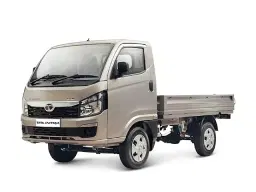
Tata Intra v10
₹7.28 Lakh Onwards
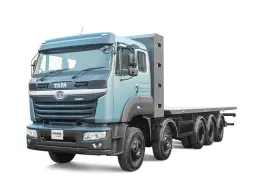
Tata Prima 35.K Auto Shift
Price to be announced
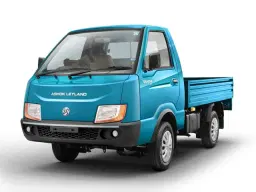
Ashok Leyland Saathi
₹6.50 Lakh Onwards

Mahindra Bolero PIK UP FB 1.3T - PS AC
₹10.48 Lakh Onwards
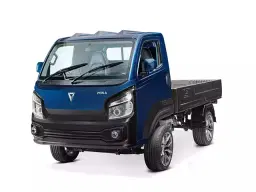
Omega Seiki M1ka
₹15.00 Lakh Onwards
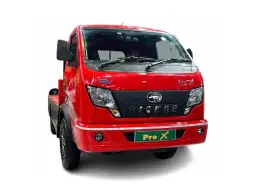
Eicher Pro x
₹17.49 Lakh Onwards
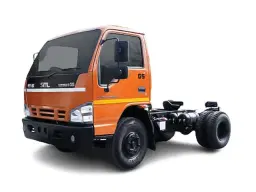
Swaraj Mazda Samrat GS Tipper Chassis
₹21.24 Lakh Onwards
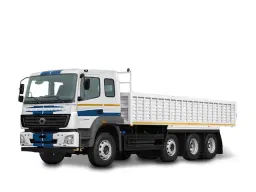
Bharat Benz 3123R
₹40.97 Lakh Onwards
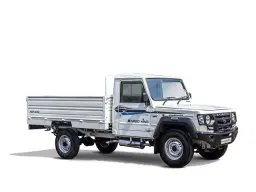
Force Kargo King
₹6.49 Lakh Onwards
Volvo FM 440 6x4
₹70.00 Lakh Onwards