
Best Commercial Vehicles for Highway Business From ₹9.19 Lakh

The best commercial vehicles for highway business in India now start at ₹9.19 lakh ex-showroom, with the Mahindra Bolero Pik-Up leading a field that also includes the Tata Yodha 2.0 and the Eicher Pro 2049. In November 2026, with diesel near ₹95 a litre and freight rates tight, the vehicle you choose for the NH run decides whether each trip earns money or merely covers the EMI.
Best Commercial Vehicles for Highway Business: What Actually Matters
Highway work punishes a vehicle differently from city delivery. You hold 70–80 km/h for hours, climb ghats fully loaded and park at a dhaba with no workshop for 200 km. That makes low-rpm torque, an honest payload rating, brake and tyre capacity, and a service network along your corridor more important than the sticker price. A truck that saves ₹50,000 upfront but loses two days a month to breakdowns is a bad trade.
Mileage behaves differently too. Claimed figures rarely reflect a full load; with one, expect roughly 12–14 kmpl from the pickups below and about 11 kmpl from the Eicher, going by figures listed by dealers and owners. All three run BS6 Phase 2-compliant diesel engines, so the choice comes down to payload, torque and price.
Mahindra Bolero Pik-Up: The Default Highway Pickup
Mahindra refreshed the Bolero Pik-Up range in January 2026, and ex-showroom prices now run from ₹9.19 lakh for the MS CBC base to ₹9.99 lakh for the AC variants. The 1.3-tonne version is rated for a 1,300 kg payload and uses a 2.5-litre diesel making about 75 bhp and 200 Nm. Those are modest numbers on paper, but the tune favours low-rpm pull over top-end power, which suits a loaded truck cruising at 60–70 km/h.
The bigger advantage is reach. Mahindra’s service and parts network covers most districts, and resale values stay firm because used-truck buyers trust the Bolero name. The on-road price in Delhi or Mumbai will be approximately ₹10.5–11 lakh, depending on RTO charges and insurance. The AC variants are worth the extra money for long-haul drivers who spend ten hours a day in the cab.
Tata Yodha 2.0: More Engine for the Same Budget
The Tata Yodha 2.0 is the Bolero’s closest rival and the better pick on pure engine performance. Its 2.2-litre Varicor turbo-diesel makes 100 PS and 250 Nm, with peak torque spread across roughly 1,000 to 2,500 rpm, a wide and flat torque curve for a pickup. Ex-showroom pricing starts around ₹9.22 lakh and reaches roughly ₹10.2 lakh for the top variants, though listings differ by dealer. Payload sits near 1.2 tonnes on single-cab trucks, a shade below the Bolero, with a GVW of about 2,950–2,990 kg.
Yodha 2.0 vs Bolero Pik-Up on the Highway
Put the two side by side and the trade-off is clear. The Yodha 2.0 offers a quarter more torque and about 25 more horsepower, so it pulls harder on ghat sections and keeps pace with traffic on four-lane highways. The Bolero carries roughly 100 kg more, costs slightly less at the entry point and likely has the wider dealer network in smaller towns. On plains routes such as Delhi–Jaipur, the Bolero’s payload and network win; on ghat-heavy routes such as Mumbai–Pune, the Yodha earns its keep.
Eicher Pro 2049: When a Pickup Is Not Enough
Step up to an intermediate commercial vehicle and the maths changes. The Eicher Pro 2049 uses a 1,980 cc, three-cylinder diesel making 100 hp at 3,200 rpm and 285 Nm between 1,250 and 2,500 rpm, in a chassis rated for 4,995 kg GVW. Payload is about 2.4–2.6 tonnes depending on the variant, nearly double the Bolero’s. Ex-showroom prices start at about ₹11.21 lakh in Delhi and rise to roughly ₹13.2 lakh for higher variants. Eicher backs the engine and gearbox with a three-year, unlimited-km warranty, and the 60-litre tank gives a loaded range of roughly 650 km.
The cost of that capacity is fuel and size. Expect about 11 kmpl loaded, and the truck is harder to park in tight town markets. CNG variants of the Pro 2049 and the Yodha exist, but CNG stations on non-metro highways are still sparse, so diesel is likely the safer choice for long routes.
Monthly Fuel Cost and EMI Maths
Assume 6,000 km a month, typical for a vehicle running 200 km a day for 30 days. The Bolero at 13 kmpl burns about 460 litres, roughly ₹43,800 at ₹95 a litre. The Eicher at 11 kmpl burns about 545 litres, roughly ₹51,800. The Eicher costs about ₹8,000 more in fuel but carries nearly twice the load, so if you can fill it, its fuel cost per tonne of payload is roughly a third lower.
On finance, assuming 20% down, a 60-month tenure and 11% interest, the Bolero needs about ₹1.84 lakh upfront and an EMI near ₹16,000. The Eicher needs about ₹2.24 lakh down and an EMI near ₹19,500. These estimates use ex-showroom prices; adding on-road costs will raise the loan, so confirm final numbers with your financier.
Which Highway Vehicle Should You Buy?
Buy the Bolero Pik-Up if you are an owner-driver on plains routes and want the lowest-risk purchase with the widest support. Pick the Yodha 2.0 if your route includes long ghat sections and you value engine response over an extra 100 kg of payload. Choose the Pro 2049 if your loads regularly cross 1.3 tonnes, because overloading a pickup wears out springs, tyres and brakes faster and invites RTO challans. Among the best commercial vehicles for highway business in 2026, the Bolero is the safest entry and the Eicher the strongest earner per trip. Check the on-road price and EMI for the Bolero Pik-Up, Yodha 2.0 or Pro 2049 in your city on Drivio before you speak to a dealer.





Popular Trucks
Tata Intra v10
₹7.28 Lakh Onwards
Tata Prima 35.K Auto Shift
Price to be announced
Ashok Leyland Saathi
₹6.50 Lakh Onwards

Mahindra Bolero PIK UP FB 1.3T - PS AC
₹10.48 Lakh Onwards

Omega Seiki M1ka
₹15.00 Lakh Onwards
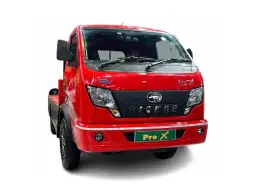
Eicher Pro x
₹17.49 Lakh Onwards

Swaraj Mazda Samrat GS Tipper Chassis
₹21.24 Lakh Onwards
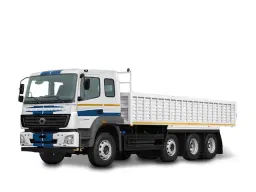
Bharat Benz 3123R
₹40.97 Lakh Onwards

Force Kargo King
₹6.49 Lakh Onwards
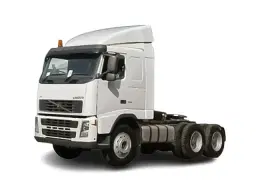
Volvo FM 440 6x4
₹70.00 Lakh Onwards