
Buy a Truck on Loan or Cash? ₹10 Lakh Example Compared
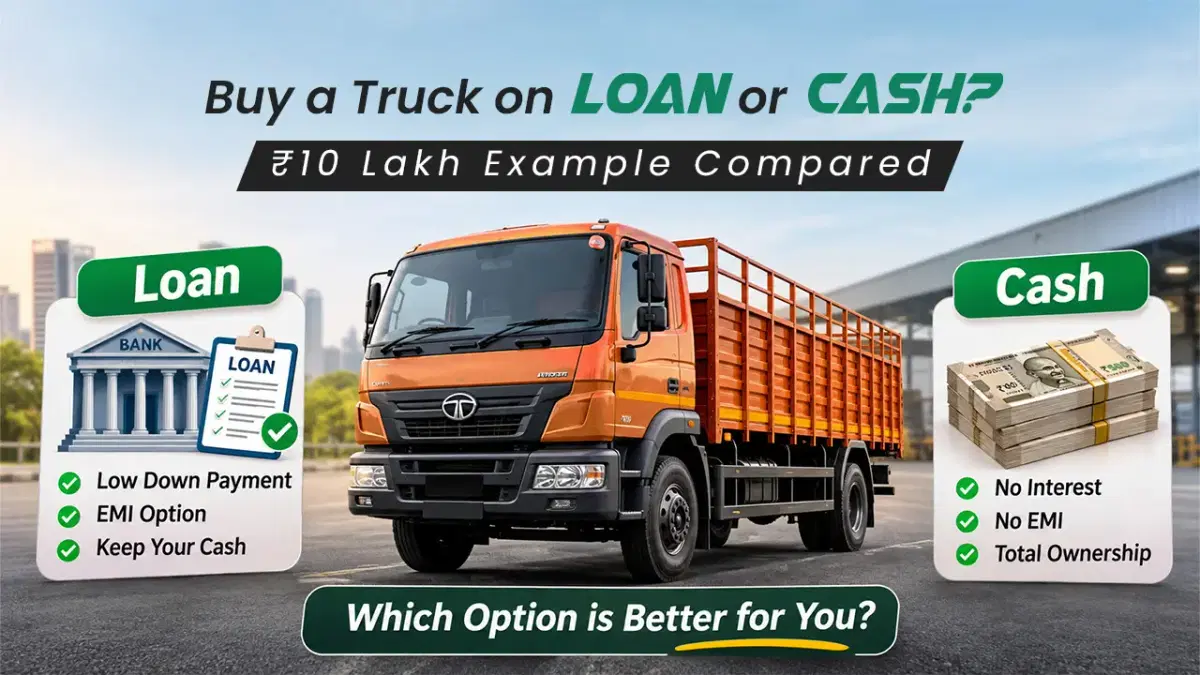
You should buy a truck on loan only when the EMI sits comfortably inside what the vehicle earns, and with festive-season finance offers still running in November 2026, the decision deserves proper arithmetic. A mini truck like the Tata Intra V10 starts at about ₹6.75 lakh ex-showroom in India, while a larger LCV easily crosses ₹10 lakh on the road. At those prices, paying cash or signing a loan changes your monthly cash flow, your cushion for repairs and the total you hand over by year five.
Truck Loan vs Cash: What a ₹10 Lakh Truck Really Costs
Take a truck priced at ₹10 lakh on the road and assume a 20% down payment, which is ₹2 lakh. The remaining ₹8 lakh, borrowed at 11% over 60 months, gives an EMI of about ₹17,393. Over five years you repay roughly ₹10.44 lakh, so the interest alone is about ₹2.44 lakh and your total outlay reaches ₹12.44 lakh. Many lenders quote roughly 10% to 14% for new commercial vehicles, and at 14% the same loan climbs to an EMI near ₹18,617 and about ₹3.17 lakh in interest, which is why the truck loan interest rate deserves as much attention as the sticker price.
Here is how the three routes compare on the same truck. If your budget is lower, our guide to mini truck price in India covers ex-showroom figures across popular models.
What Paying Cash Gives You, and What It Takes Away
A cash purchase means no interest, no lender hypothecation on the RC and complete freedom to sell the truck whenever you like. It can also help you negotiate on accessories and delivery charges, though a discount is never guaranteed. The cost is liquidity: ₹10 lakh leaves your account on day one and does not come back until the truck earns it. Freight payments from transporters and traders commonly arrive 30 to 45 days late, and a fresh set of tyres or an unplanned clutch job can land in the same month. An operator with no reserve left after paying cash often ends up borrowing anyway, at a worse rate and in a hurry.
When Is It Smart to Buy a Truck on Loan?
A loan works when the truck’s earnings cover the EMI with room to spare, so run the monthly numbers first. A mini truck covering 3,000 km a month at a real-world 14 kmpl burns about 214 litres, and at ₹95 a litre diesel costs roughly ₹20,400. Add the ₹17,393 EMI and you are at about ₹37,800 before the driver’s pay, insurance, tyres and service. As a working rule, keep the EMI under 25% of monthly gross freight, which means this truck should bill around ₹70,000 a month. Below that, a loan becomes a weight rather than a lever. Above it, borrowing keeps ₹8 lakh in the business for a second vehicle, a stock of spares or simply a buffer. Interest on a loan for a business vehicle is generally claimable as a business expense, and regular repayments build the credit history that gets your next truck approved faster, though your chartered accountant should confirm the treatment for your case. Owners weighing running costs can also read our Tata Ace EV vs Ace Gold Diesel comparison to see how fuel savings change the earnings side of this equation.
The Costs Both Routes Share, and the Ones Only a Loan Adds
Both routes carry registration, insurance and, for chassis-cab trucks, the cost of building a cargo body, so budget for them before comparing offers. A loan adds its own line items: a processing fee, documentation charges, insurance that lenders usually require to be comprehensive, and a hypothecation entry on the RC that stays until the last EMI clears. Penal charges apply to late payments, and repeated misses hurt your CIBIL score and can lead to repossession. That risk is real for operators whose freight payments arrive late, so keep a buffer equal to at least one or two EMIs in a separate account before the first instalment falls due.
How to Lower the Cost of Truck Finance
Your CIBIL score is the biggest single lever, and lenders generally reward 700 and above with better terms. A larger down payment helps in two ways: it shrinks the principal and often brings a lower rate, so moving from 20% to 25–30% is worth a conversation with the lender. Shorter tenure saves real money. Cutting the loan from 60 to 48 months raises the EMI to about ₹20,670 but trims interest from ₹2.44 lakh to about ₹1.92 lakh, a saving of roughly ₹52,000. Compare at least three offers across banks and NBFCs, get the processing fee in writing (SBI lists around 0.50% plus GST), and check foreclosure charges before you sign so a strong season lets you prepay without a penalty. Festive offers from August to November and the year-end push in March are the usual windows for fee waivers.
Verdict: Pay Part in Cash, Finance the Rest
For a first-time or single-truck operator, the better route is a 20–30% down payment with a 48 to 60-month loan, keeping the remaining cash as working capital. Pay full cash only if you will still hold at least three months of running expenses after the purchase and have a steady freight contract. Skip the loan, or choose a cheaper model, if the EMI would cross 30% of monthly earnings or your income depends on spot loads. The Tata Intra V10 is a sensible test case: its on-road price in Delhi is likely to land near ₹7.5 lakh, a little higher in Mumbai, and a smaller loan eases every number above. Before you decide whether to buy a truck on loan or pay cash, check the on-road price and EMI for the Tata Intra V10 in your city on Drivio.
Popular Trucks
Tata Intra v10
₹7.28 Lakh Onwards
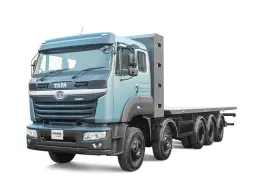
Tata Prima 35.K Auto Shift
Price to be announced
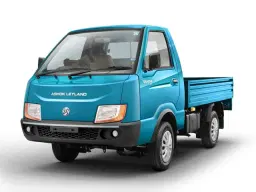
Ashok Leyland Saathi
₹6.50 Lakh Onwards
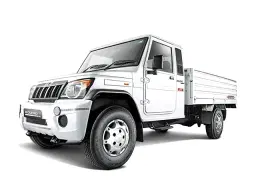
Mahindra Bolero PIK UP FB 1.3T - PS AC
₹10.48 Lakh Onwards
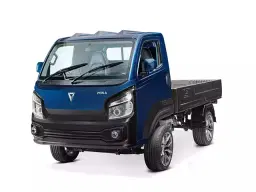
Omega Seiki M1ka
₹15.00 Lakh Onwards
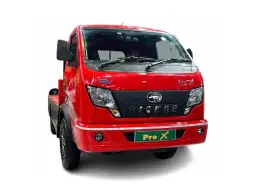
Eicher Pro x
₹17.49 Lakh Onwards
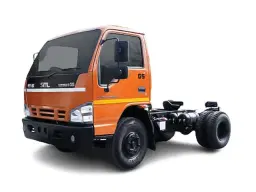
Swaraj Mazda Samrat GS Tipper Chassis
₹21.24 Lakh Onwards
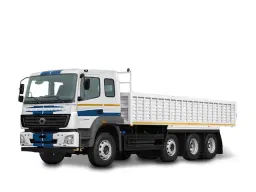
Bharat Benz 3123R
₹40.97 Lakh Onwards
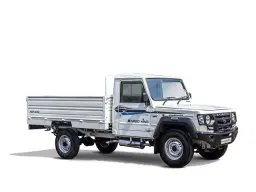
Force Kargo King
₹6.49 Lakh Onwards
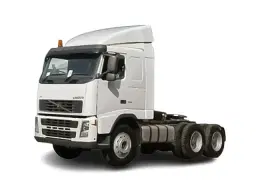
Volvo FM 440 6x4
₹70.00 Lakh Onwards