
How to Choose Your Electric Truck: A Fleet Buyer's Guide for 2026
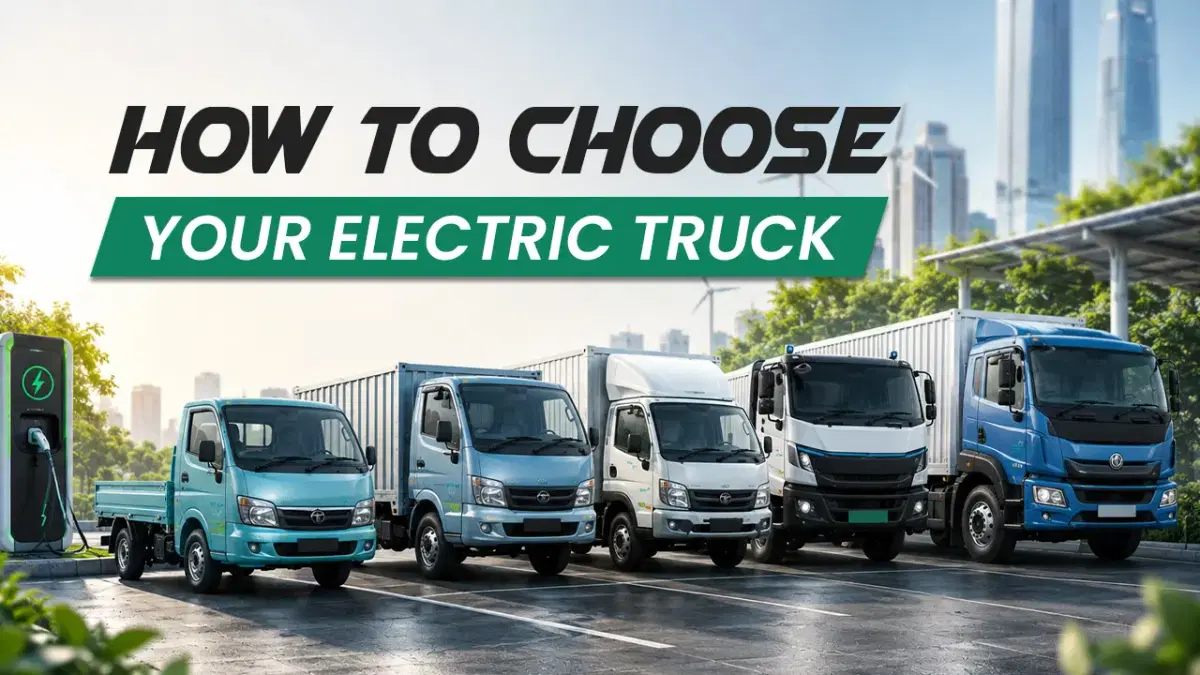
Knowing how to choose your electric truck has become one of the most consequential decisions a transport business in India can make this year. With diesel hovering near ₹95 per litre and electric commercial vehicle registrations climbing steadily through 2026, fleet owners across Delhi, Mumbai, Bengaluru, and Pune are weighing the shift more seriously than ever. Lower running costs, tighter emission norms in city cores, and continued government support through schemes like PM E-DRIVE have pushed adoption forward — but the wrong purchase can quietly inflate your total ownership cost for years. A truck bought on price alone, without matching payload, range, or charging access to your actual routes, often ends up costing more than the diesel alternative it was meant to replace.
How to Choose the Best Electric Truck for Your Business
The starting point isn't the spec sheet — it's your route. A courier company doing 80 km of stop-start city driving has entirely different requirements from a cold-chain operator running 150 km highway legs to a distribution hub. Getting this match wrong is the single biggest reason electric truck purchases disappoint fleet owners in their first year.
Choosing the Right Payload
Payload capacity and GVW (gross vehicle weight) should be the first numbers you check, not the last. India's electric mini-truck segment spans a wide range: the Tata Ace EV carries around 600 kg, the Tata Ace EV 1000 handles a full 1,000 kg, the Mahindra Zeo sits at 765 kg, and the Switch IeV4 goes up to roughly 1.7 tonnes. Larger commercial EVs like the Tata Ultra E.12 push into the 6-tonne-plus payload bracket for intermediate haulage.
Buying more payload than you need wastes money on a larger battery, a higher purchase price, and higher insurance — while carrying dead weight most of the time. Buying less means either overloading the vehicle on peak days or making extra trips, which erodes the fuel-cost savings that justified going electric in the first place. FMCG distributors and e-commerce last-mile operators generally do well with the 600–1,000 kg mini-truck class, while municipal contractors and building-material haulers need to look at the heavier intermediate commercial EVs instead.
Battery Capacity and Driving Range
Claimed range figures on Indian electric trucks are tested under standardised conditions that rarely match real-world use. A Tata Ace EV with its 21.3 kWh battery is certified for roughly 154–161 km, but loaded to capacity in Delhi or Bengaluru traffic, most operators report closer to 100–120 km. The Mahindra Zeo, with its 18.4 kWh or 21.3 kWh battery options, follows a similar pattern — certified range around 160 km, real-world figures noticeably lower once air conditioning, full payload, and stop-start traffic enter the equation.
Cold and heat both take a toll on lithium-ion packs, and regenerative braking helps recover some charge during city driving but won't fully offset highway-speed consumption. The practical approach is to take the claimed range, apply a 25–30% real-world buffer, and check whether that adjusted number still comfortably covers your daily route with margin for detours or traffic delays. Heavier trucks like the Ashok Leyland Boss EV, with its 201.5 kWh battery and claimed 230 km range, are built for intermediate haulage rather than pure last-mile work, and the same buffer logic applies.
Charging Infrastructure
Depot charging is the backbone of commercial EV operations in India — a truck that returns to base overnight and charges on a dedicated AC or DC point avoids most of the anxiety around public charging. Businesses running fixed routes with predictable return times, such as FMCG distributors or municipal waste collection fleets, can rely almost entirely on overnight AC charging, which typically takes 6 to 7 hours on a standard setup.
Operators with variable routes, multiple shifts, or same-day return-to-route requirements should prioritise trucks that support DC fast charging. The Tata Ace EV, for instance, can go from 10% to 80% in about 105 minutes on a CCS2 DC fast charger, which matters if the vehicle needs a mid-shift top-up. Public charging infrastructure in India has expanded meaningfully through 2026, particularly along major freight corridors and in metro logistics parks, but it still isn't dense enough to plan around casually — route planning around known charging points remains essential rather than optional.
Total Cost of Ownership
Purchase price is only the entry point. Running an electric mini-truck typically costs around ₹1 per km in electricity compared to ₹4–5 per km for an equivalent diesel vehicle at current fuel prices, and that gap compounds fast across a fleet doing 100+ km daily. Maintenance savings are real too — fewer moving parts mean no engine oil changes, no fuel filters, and reduced brake wear thanks to regenerative braking, though the battery and electric drivetrain do need specialised servicing that not every local garage can handle yet.
Battery warranties on most Indian electric trucks run 7 years or roughly 1.5–1.75 lakh km, which should factor into any resale or replacement planning. Government incentives, including support routed through PM E-DRIVE for commercial EVs and various state-level subsidies, can meaningfully reduce upfront cost, though eligibility and amounts vary by state and vehicle category — it's worth confirming current terms before finalising a purchase rather than assuming last year's numbers still apply.
Financing Your Electric Truck
EV truck financing works much like diesel commercial vehicle loans, with a few added variables. On a typical structure of 20% down payment, 60-month tenure, and 11% interest, a Tata Ace EV priced around ₹10.5 lakh would carry an EMI in the region of ₹18,000–20,000 a month, before accounting for any subsidy that reduces the on-road price. Lenders increasingly factor in projected fuel-cost savings when assessing loan eligibility for commercial EVs, which can improve approval odds for small operators compared to a few years ago.
Down payment planning matters more here than with diesel trucks, since a larger upfront subsidy can shrink the loan principal significantly. Resale value for electric commercial vehicles in India is still an evolving market — battery health becomes the dominant factor in resale pricing rather than mileage alone, so operators who maintain consistent charging habits and avoid deep discharge cycles tend to protect resale value better over a 4–5 year hold.
Compare Popular Electric Trucks
E-commerce and courier businesses running dense city routes generally suit the Tata Ace EV or Ace EV 1000. Grocery, dairy, and kirana delivery operators tend to prefer the Mahindra Zeo for its stronger gradeability and payload balance. Businesses moving heavier loads between suburban hubs are better matched to the Switch IeV4, while intermediate freight operators looking at 14-tonne-class haulage should be evaluating the Ashok Leyland Boss EV rather than a mini-truck stretched beyond its design intent.
Common Mistakes Buyers Make
The most frequent error is choosing purely on ex-showroom price without checking whether local charging access supports the route. A truck that's cheaper to buy but requires detours to a charging point every other day loses its cost advantage quickly. Underestimating payload is a close second — operators who buy a 600 kg truck for a business that regularly ships 800 kg end up either overloading the vehicle or paying for extra trips.
Overestimating claimed range is another recurring issue; treating certified figures as guaranteed daily distance, rather than applying a real-world buffer, leads to trucks arriving back at depot with less charge margin than planned. Skipping warranty details — particularly battery warranty terms and what voids them — is a mistake that surfaces two or three years in, when a degraded battery isn't covered because of a missed service interval.
Fleet operators running predictable, fixed-route city or intra-city logistics — last-mile delivery, FMCG distribution, municipal collection — are well positioned to switch to electric trucks today, given current battery warranties and the cost gap versus diesel. Businesses with long-haul, unpredictable, or charging-infrastructure-poor routes may be better served waiting another cycle or two as public charging density and battery range both continue to improve.
Before making your decision, check the latest on-road price, finance options, and EMI for electric trucks in your city on Drivio Trucks to find the most suitable option for your business.


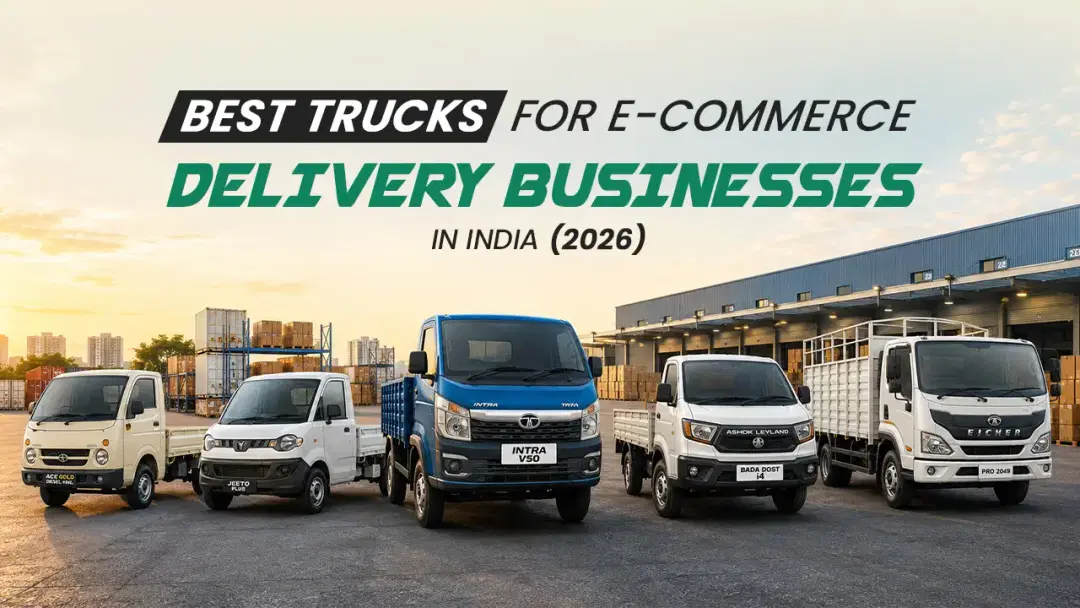
Popular Trucks
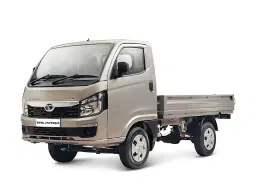
Tata Intra v10
₹7.28 Lakh Onwards
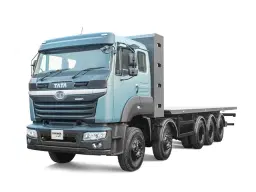
Tata Prima 35.K Auto Shift
Price to be announced
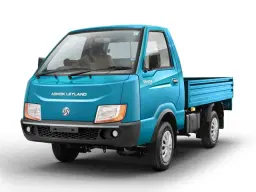
Ashok Leyland Saathi
₹6.50 Lakh Onwards
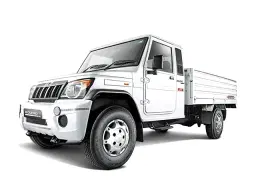
Mahindra Bolero PIK UP FB 1.3T - PS AC
₹10.48 Lakh Onwards
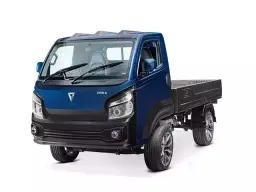
Omega Seiki M1ka
₹15.00 Lakh Onwards
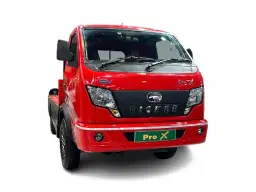
Eicher Pro x
₹17.49 Lakh Onwards
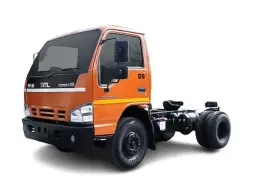
Swaraj Mazda Samrat GS Tipper Chassis
₹21.24 Lakh Onwards
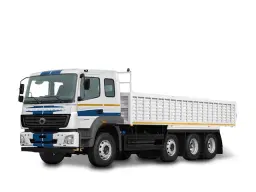
Bharat Benz 3123R
₹40.97 Lakh Onwards
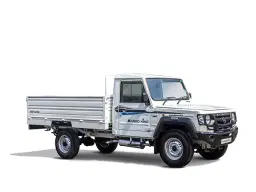
Force Kargo King
₹6.49 Lakh Onwards
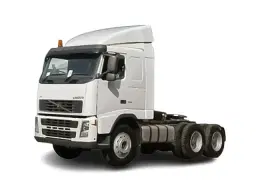
Volvo FM 440 6x4
₹70.00 Lakh Onwards