
E-Rickshaw Battery Replacement Cost Explained
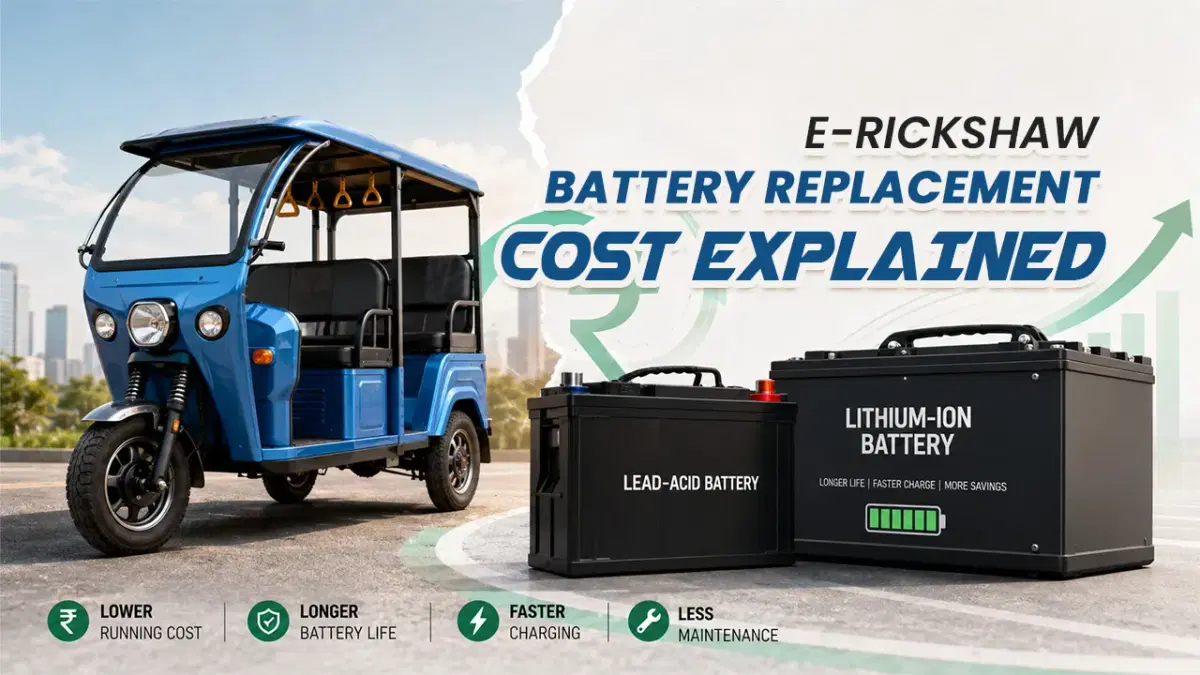
E-Rickshaw Battery Replacement Cost is the single biggest recurring expense that catches most first-time operators off guard in India, running anywhere from ₹25,000 to ₹95,000 depending on whether the vehicle runs on lead-acid or lithium-ion cells. For a driver earning ₹600–₹900 a day ferrying passengers or delivery loads, a battery pack that dies after just 14 months can wipe out weeks of profit in one visit to the mechanic. That is why, before financing an e-rickshaw, understanding the true battery life of e-rickshaw units and their replacement economics matters as much as comparing on-road prices.
How Much Does an E-Rickshaw Battery Cost in India?
Most e-rickshaws on Indian roads still run lead-acid battery banks because they keep the upfront vehicle price low. A full lead-acid replacement set — typically four to six 100Ah to 135Ah units wired for 48V — costs between ₹25,000 and ₹45,000 at retail, fitted. Tubular variants aimed at heavy daily use sit toward the top of that range, while basic flat-plate packs from local dealers can be sourced closer to ₹25,000. Warranty coverage on lead-acid packs is thin, usually 6 to 12 months, and most dealers do not prorate the remaining warranty if a cell fails early.
Lithium-ion packs cost considerably more upfront. A 48V, 100Ah–110Ah LFP (Lithium Iron Phosphate) battery from established suppliers runs ₹55,000 to ₹95,000, with higher-capacity 200Ah packs from organised manufacturers crossing ₹1 lakh. The e-rickshaw battery price for lithium units reflects better cell chemistry, an integrated Battery Management System, and materially longer warranty cover — commonly 2 to 3 years, and up to 5 years on premium packs from brands manufacturing for the commercial EV segment. Installation charges for both chemistries are usually bundled into the retail price when bought through an authorised dealer, though roadside battery shops may add ₹500–₹1,500 for wiring and fitment.
Lead-Acid vs Lithium-Ion: What Actually Changes Over Time
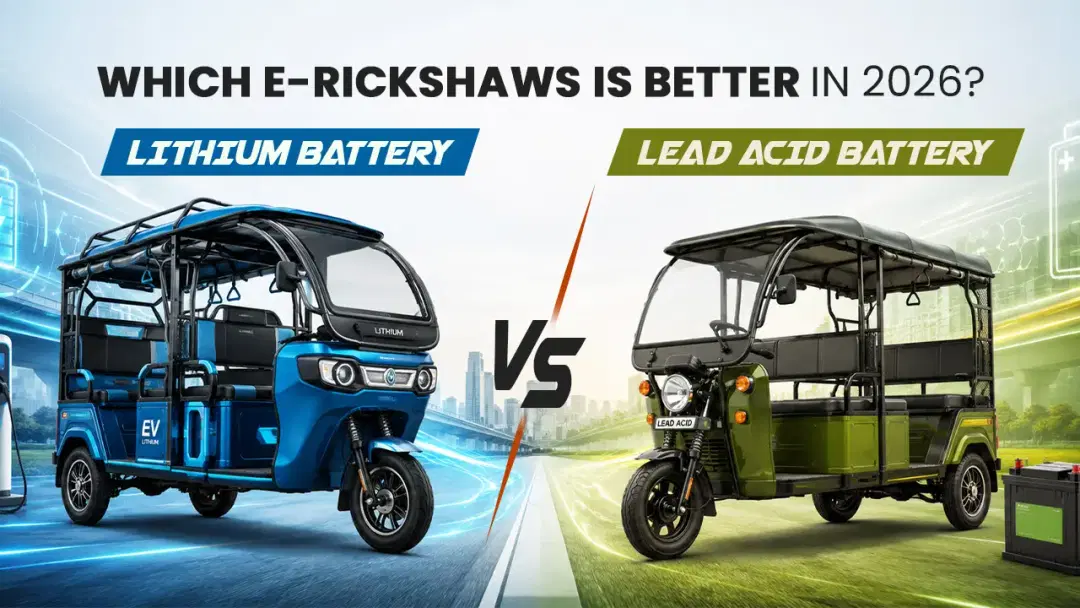
The real difference between the two chemistries shows up in how often you're paying, not just how much. A lead-acid pack under typical Indian commercial use — 80 to 100 km a day across mixed road conditions — degrades to unusable capacity within 12 to 18 months, sometimes sooner on hilly routes or with irregular charging. Lithium-ion packs, by contrast, are rated for 2,000-plus charging cycles and typically deliver 4 to 5 years of usable service, translating to roughly 40,000–50,000 km before capacity drops meaningfully below rated range.
For an operator covering under 60 km a day, lead-acid can still make financial sense simply because the entry cost is lower and local mechanics are familiar with the technology in almost every town. For anyone running 80 km or more daily — the norm for passenger e-rickshaws in cities like Lucknow, Patna, and Kanpur — the lithium math starts to win well before the first lead-acid pack would need replacing twice over.
What Actually Kills Battery Life
Charging habits do more damage than most operators realise. Plugging in a partially discharged lead-acid battery repeatedly, or leaving it on charge overnight beyond the recommended cutoff, accelerates plate sulfation and shortens usable life by months. Deep discharge — running the battery down to near-zero before charging — is equally damaging for both chemistries, though lithium packs tolerate it better thanks to their Battery Management System, which cuts off power before cell voltage drops into damaging territory.
Overloading is the other major factor unique to Indian operating conditions. E-rickshaws are frequently loaded beyond their rated passenger or cargo capacity, and combined with potholed roads and steep inclines in semi-urban routes, this pulls higher current from the battery than the pack is designed to sustain regularly. Over months, this shows up as reduced range and faster capacity fade, regardless of battery chemistry. Basic maintenance — checking electrolyte levels weekly on lead-acid packs, avoiding full discharge, and charging at recommended amperage rather than using unregulated fast chargers — can add genuine months to a pack's working life.
Monthly Ownership Impact and the Repair-vs-Replace Question
Spread across its working life, a lead-acid pack effectively costs an operator ₹1,700–₹2,800 a month once you divide the replacement price by its 12–18 month lifespan — before accounting for electricity. A lithium pack, spread across 4–5 years, works out closer to ₹1,000–₹1,600 a month, even though the upfront outlay is more than double. Electricity cost itself favours EVs heavily over fuel-powered alternatives: charging an e-rickshaw typically costs a fraction of the diesel or petrol equivalent for the same daily distance, which is the core reason operators are willing to absorb a larger battery bill in the first place.
Repair rather than full replacement only makes sense for lead-acid packs within the first 6–8 months, when a single failed cell can sometimes be swapped rather than replacing the entire bank. Beyond that window, or for any lithium pack showing BMS fault codes, replacement is almost always the more sound financial call — repairing an ageing battery bank rarely restores more than a fraction of original range, and the labour cost of repeated repairs adds up faster than most operators expect. Some state EV policies extend subsidies or interest subvention on lithium battery purchases for registered commercial three-wheelers, so it is worth checking with the regional transport office or dealer before committing to a full-price lithium upgrade in July 2026.
Which Battery Makes Sense for Your Operation
Operators running short urban routes under 60 km a day, working on tight upfront budgets, or operating in towns where lead-acid mechanics are the only serviceable option nearby, are usually better off sticking with lead-acid despite the shorter replacement cycle. Fleet owners and high-mileage passenger or delivery operators covering 80 km or more daily should treat the lithium-ion upgrade as a business investment rather than an expense — the lower per-km running cost and longer service interval typically pay back the price difference within 18 to 24 months of heavy use. For a deeper look at which vehicles carry the best battery economics out of the factory, Drivio's guide to the best e-rickshaws in India is worth reading alongside this one, along with the detailed lithium-ion vs lead-acid comparison for a technology-first breakdown.
Check the latest e-rickshaw prices, battery replacement costs, and EMI options in your city on Drivio.

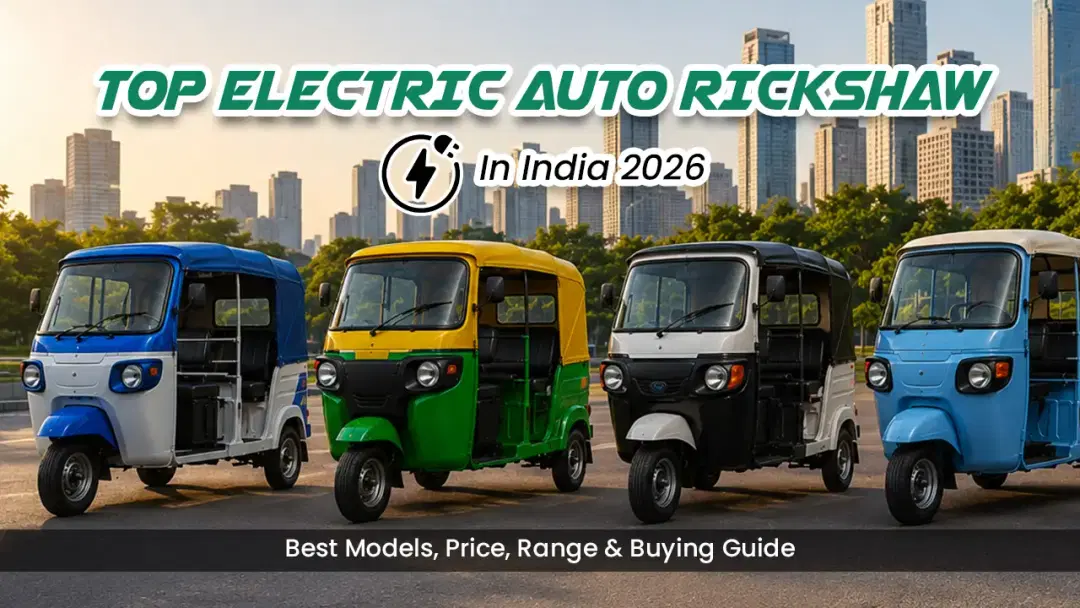

Popular Auto Rickshaws
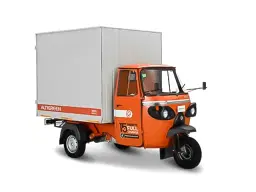
Altigreen neEV TEZ
₹3.55 Lakh Onwards
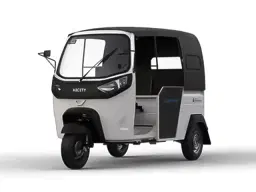
Euler Motors HiCity
₹3.63 Lakh Onwards
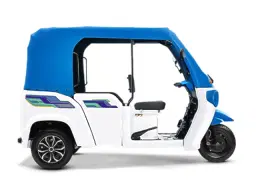
Mahindra Treo plus
Price to be announced

Piaggio Ape Xtra LDX Plus HT
₹2.45 Lakh Onwards
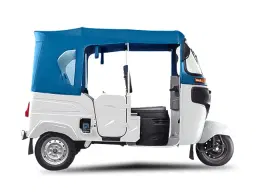
Bajaj Re e-tec 9.0
₹3.76 Lakh Onwards
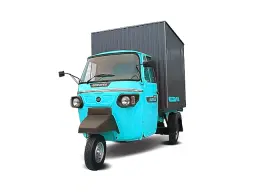
Greaves Mobility ELC 3 Wheeler
₹3.67 Lakh Onwards
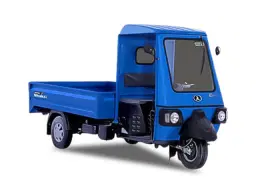
ATUL Gem Cargo 200 Bi Fuel CNG
₹2.65 Lakh Onwards
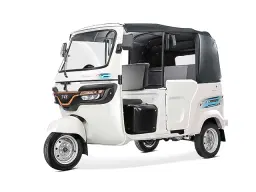
TVS King ev max
₹2.95 Lakh Onwards
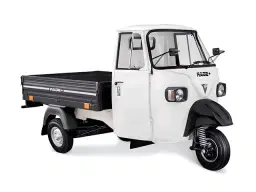
Omega Seiki Rage Plus 125
₹4.09 Lakh Onwards
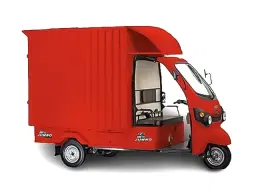
Kinetic Safar Shakti Jumbo
₹3.40 Lakh Onwards